
What is it about a short story that makes it more appealing to readers?
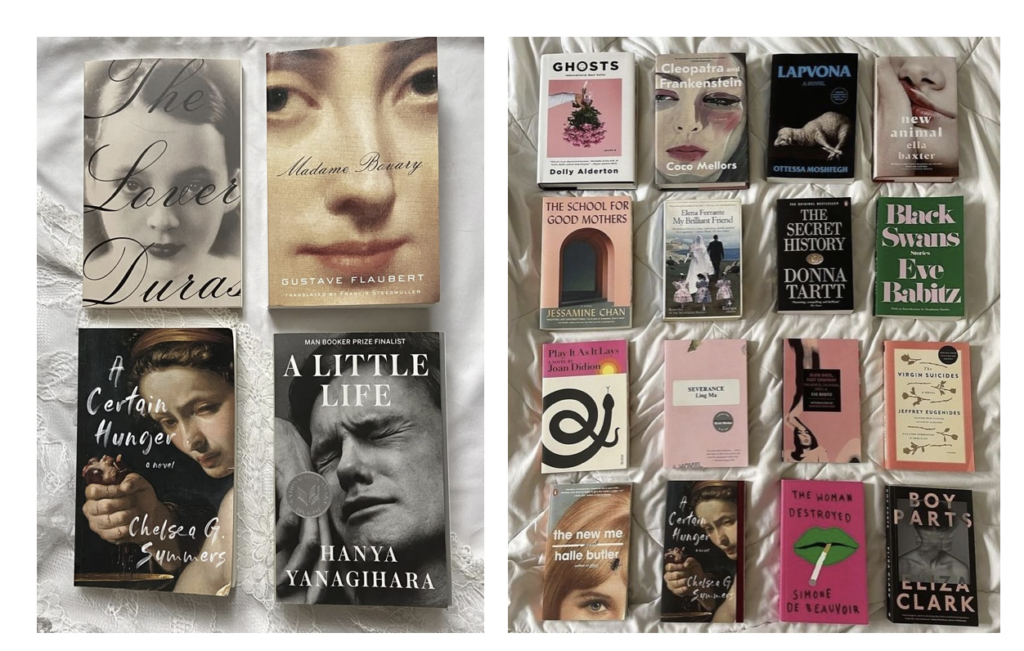
Perhaps it is the length, something we can pick up in between our busy lives rather than being completely dedicated to a huge novel. I would argue that short stories are simply better when one experiences a sudden urge to feel and think deeply. There is something about short stories that hold more emotional reasonnace than a long novel, allowing one to be captured momentarily away from reality and be transported into the complex mind of another character.
“A short story is a love affair, a novel is a marriage. A short story is a photograph; a novel is a film.” – Lorrie Moore
Moore’s quote conveys the power that a short story holds. A short story can be quiet and blurred. Something that stands on its own, an echo of meaning as opposed to a scream of certainty. We as modern readers are all different, taken aback by a different texts, genres, styles or writer’s voices. I have always adored the voices of Sally Rooney, Virgina Woolf and Anthony Doer; but finding a voice that you may never have come across from a short story can be just as special.
One of my favourite short stories is the Japanese translation Before the Coffee Gets Cold by Toshikazu Kawaguchi. I read this during the summer of 2022, nestled on my grandmother’s balcony, with the sun shining across the pages and a glass of water beside me, ice clinking together and beads of condensation dripping down the sides. I was first drawn to the title; anything with the word “coffee” piqued my interest as an avid coffee drinker. That, alongside the relatively short length of the 224-page novella, made it even more appealing, especially as it contains multiple short stories within it. Kawaguchi’s novel is set in a Tokyo café that offers customers the chance to travel back in time to any point they choose, as long as they follow the strict rule of returning to the present before the coffee gets cold.
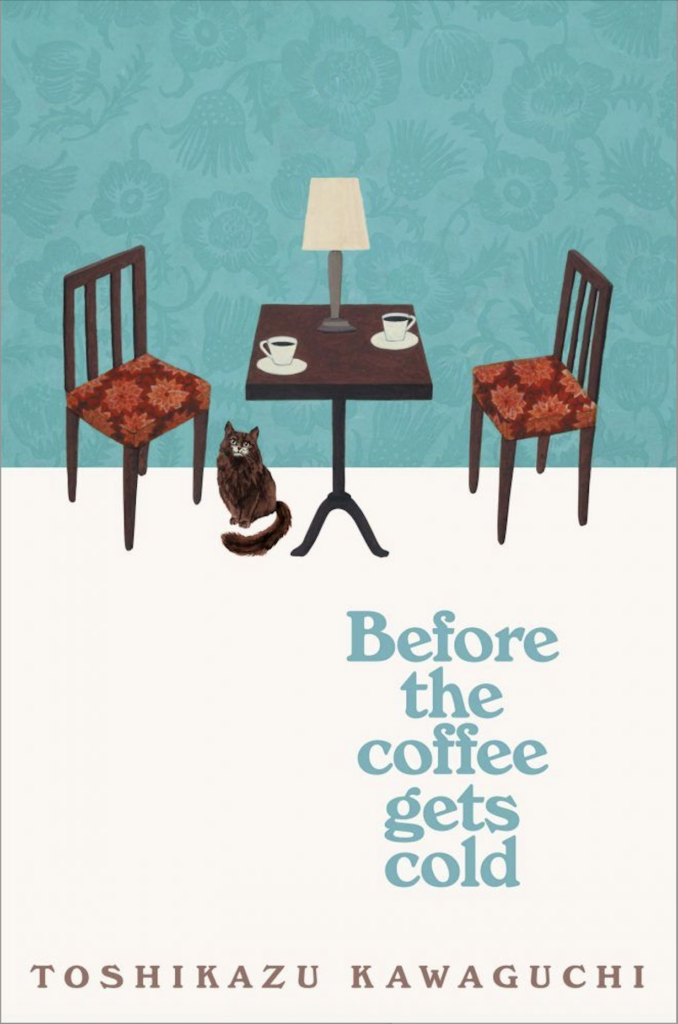
The narrative follows four different situations, exploring the themes of love to grief, highlighting how even if the past cannot be changed, the potential for the present and future can be. It is a deeply touching piece of work that was beautifully written.
I should note that I read the English translation of Toshikazu Kawaguchi’s work, so it may not fully capture the nuance of the original text. However, I still believe it to be an incredible short story that has stayed with me and made me think alot about that question many ponder on:
What if I did something differently?
I love the idea of everything happening for a reason and that we learn from mistakes/ experiences. Yet, when reading Kawaguchi’s Before the Coffee gets Cold, I could help myself but feel irritated by how these characters had thoughtlessly acted, unaware of the concequences of their actions. It was only once I closed the final pages that I realised this may have been what Kawaguchi intended readers to feel, to sit with the discomfort. His short novel was not to highlight the actions themselves but giving the opportunity to the characters to face the concequences over a cup of coffee.
It was only after I begin reading into critics thoughts and reviews that I found out that the novel had been adapted from a play. On returning to the novel, this made perfect sense. I couldnt help but just try to visually direct the narrative into a play, how I might stage it or have characters perform lines to emphasis meaning. The confined setting, the intimate conversations, and the emotional intensity all lend themselves naturally to the stage.
In the end, Before the Coffee Gets Cold is less about rewriting the past and more about learning how to more forward with that. And perhaps that is why it resonates so deeply, because while we cannot go back and change our choices, we can still decide what they mean for us now.

