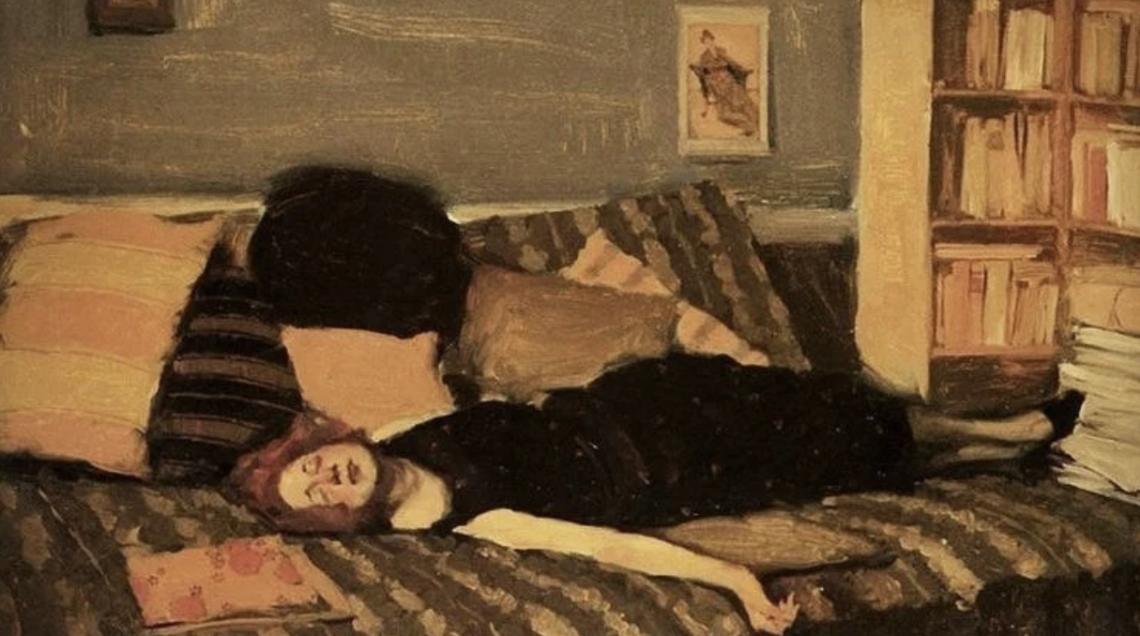
I lay on the wooden floor of my apartment, staring up at the dusty ceiling, listening to the consistent thuds and muffled voices from the flat above. My arms lay out to either side, palms facing upward, wishing that something would collapse on top of me.
I hadn’t eaten all day. The low, persistent growl in my stomach gnawed at me, reminding me of the hollowness spreading inside.
I wanted to cut my womb out. Making a small incision beneath my belly where it had already begun to decay, then peel back the fragile, paper-thin barrier of the skin and carefully pull it out, ridding myself of this rotten part – this human part. Once I scraped away the last pieces, I imagined sewing back the torn seel with pretty black ribbon, tightening the bow so that the raw exposed wound would burn together out in the damp air.
Yet rot is a patient creature, silent and unpredictable.
A part of me wondered if it had seeped through that cord that tied us together. Whether it had latched onto those little limbs, settling softly beneath her new skin, imprinting on her before I could do anything about it.
When the nurses told me that she was healthy, I believed them, not a single imperfection whispered in my head. It was completely quiet, and she was all that existed. But now that felt too good to be true.
I could see Tina’s room from the floor, the white cot waiting like an unopened promise. Shelley, my neighbour, came over one evening when Tina was only a month old, to build the cot with me. They always say that you shouldn’t have the baby sleep with you in your bed – but something about that warm milky smell, her tiny pursed bottom lip and soft porcelain skin was impossible to let go for longer than five minutes. I liked feeling her body next to mine, listening to the rhythm of her heartbeat or watch the delicate rise and fall of her breathing, knowing that I was doing it – being a mother.
Till this day, she has never slept in that cot.
I drew in a long, steady breath and rolled my heavy head over to the other side to see Tina’s face serene in sleep, caressed by the glow of orange light from the fireplace, laying on the bundles of pillows and blankets that she had tried to make into a fort. The grey strands of hair worried me, sprawled out around my face next to my beautiful baby, like desperate fingers eagerly grasping towards her to soak in some of her youth. Forty-six was young, or so I told myself.
Yet, I always had been fading, hidden in the shadows of those around me who flourished in my failure to do anything about it.
At times it felt like reaching out to catch the sap dripping from an old tree. I held my hands open, cupped and trembling, hoping I could keep every drop. But it slips through the spaces between my fingers, sliding along the creases of my palms, down my wrists, and slowly across my forearms. Still, I don’t move. I stay in that sticky, torturous discomfort because somehow it feels easier to endure the silence than to admit I can’t hold it all. How foolish it may seem to others to suffer rather than to scream that it was too much, that I wanted someone to free me than let the weight thicken and harden around me. Walking away wouldn’t bring clarity or closure, though it might offer a momentary of relief. Yet, beneath that numbness lies something harsher, that unforgiving part of me that turned outward pain inward. The sap becomes a mirror, reflecting how the resentment I felt for others slips into a quiet hatred of myself.
I knew their faces all too well. A sickening familiarity that I had allowed to become normal rather than ripping the roots from the ground and letting the tree wither instead of poisoning my garden, my body, my chance of being a good mother. It was some nights like this, while Tina was sleeping, that I would imagine what I would say.
On Tina’s first birthday I had a dream that was carved into my memory. I sat waiting in a cold room that resembled my childhood bedroom, somewhere I once associated to security was now transformed into the most vulnerable and exposing place. One by one, shadows of each person drifted towards me, sitting in utter silence as the walls would whisper my painful stories back to me, taunting me with my inability to do anything about it. Then finally, I would just ask why.
The following morning, I woke up to find Tina’s little fingers still wrapped around my index finger. That was when I realised the truth is brutal in its simplicity.
Sometimes, there is no reason.
And sometimes, the rot comes from believing there should be.

